Is Your Brand Built to Scale?
A car wash owner rebranded before franchising, not after. When you plan to scale, your brand is infrastructure and an asset, not decoration.
Article
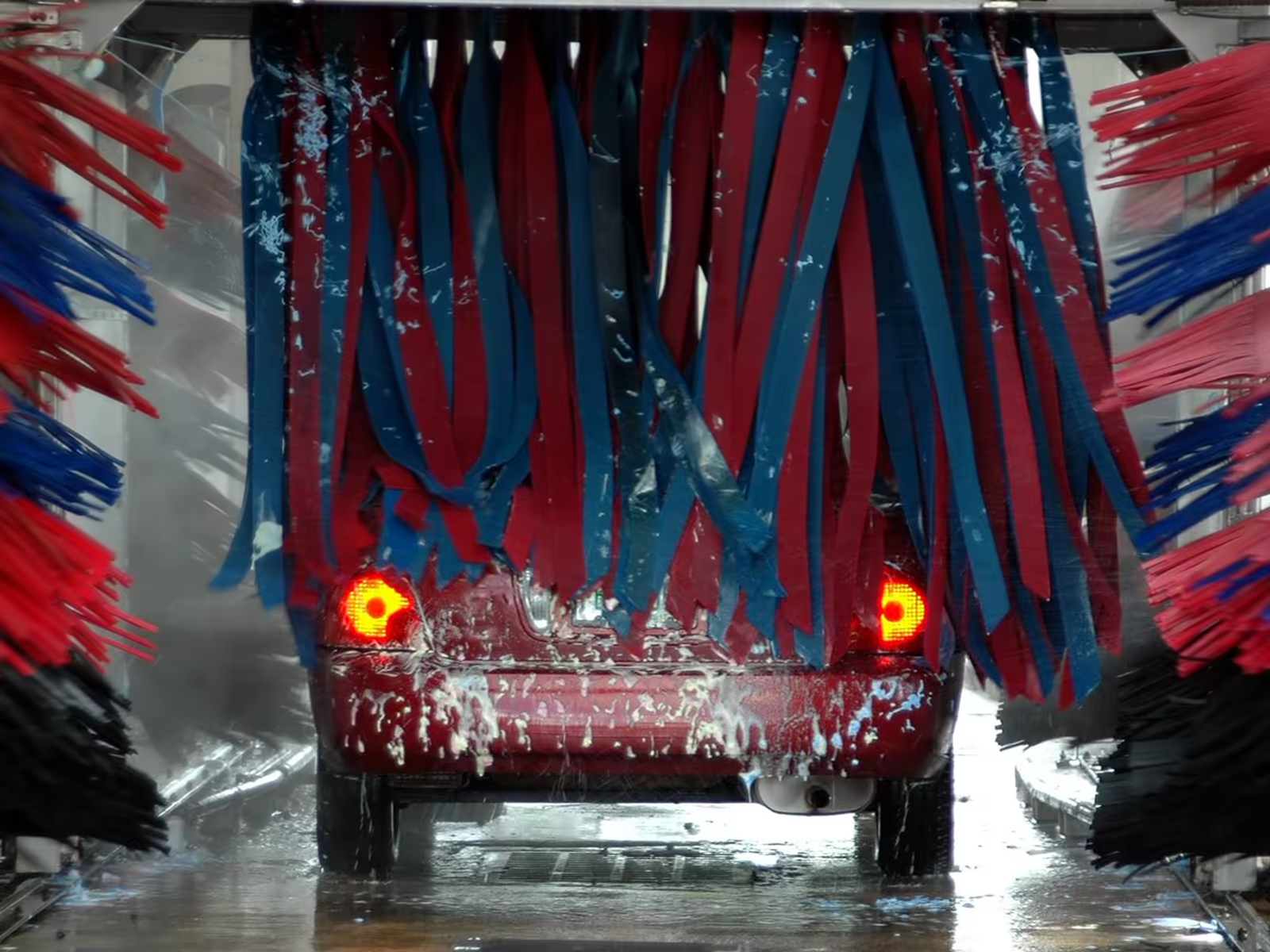
One of our clients doesn't own one car wash. He's buying several, standardizing them, and building toward a franchise model he can eventually license and sell.
That changes what a brand has to do.
Most owners rebrand too late
Most people rebrand because they're embarrassed by how they look.
He rebranded because he understood something most business owners never think about. A brand isn't just how you look today. It's the infrastructure your entire business scales on tomorrow.
That timing matters. It's way cheaper to build the system before you need it in five places at once than to retrofit it while locations are already opening.
What scaling actually demands from a brand
- Every location needs to look identical.
- Every franchisee needs a system they can follow without guessing.
- Every sign, uniform, and piece of signage needs to work whether he's operating one location or fifty.
That isn't a logo problem. That's a systems problem wearing a logo.
A loose brand that depends on the owner's taste can't be handed to a franchisee. A documented system can. Logos, colors, signage specs, rules a stranger can follow and still get it right.
The stranger test
Here's the fastest way to tell which one you've got.
Hand your brand to a brand new manager. No instructions from you. No "you know what I like." Just the files and the guidelines, if they exist.
Can they order a sign, a uniform, and a flyer that all look like the same business? If yes, you've got a system. If they have to call you three times to get it right, you've got a habit with a logo attached.
Most single location brands fail that test. It doesn't hurt yet, because the owner is standing right there fixing everything by eye. Scaling is what makes it hurt.
We built the system before it had to scale
We built a brand identity system designed to scale before it ever had to.
That meant thinking like an operator, not just a designer. How does this look on a building at 40 miles per hour? How does a new manager order uniforms without inventing their own version? What never changes, and what can flex by location?
Those answers live in the identity system and its guidelines. It's the same thinking behind keeping a brand from losing its shape once other people start using it.
A brand built to sell is an asset
Because when you're building something to franchise or sell, your brand isn't decoration. It's an asset on the balance sheet.
Buyers pay for systems they can run without the founder in the room. A recognizable, consistent brand across locations is proof the business works that way. A messy one is a question mark they'll price into the offer.
That's why our rebranding work starts with the destination question. Where is this business going, and does the brand need to already work there? If you're opening location two next year, the brand has to be built like location five is already on the map. Retrofitting it later means new signage, new uniforms, new everything, at exactly the moment you're busiest spending money on the growth itself.
The question to ask your own business
You don't need franchise plans to use this thinking. Ask what happens to your brand if your workload doubles. Or if you hire the team you keep saying you'll hire.
Does the quality of how you look survive other people producing it? Or does it depend on you personally reviewing every flyer, post, and shirt?
If it depends on you, you don't have a brand system yet. You have a personal habit. Habits don't transfer, scale, or sell. Systems do. And building one while the business is still a manageable size is the cheapest time to do it.
Planning to grow past one location? Book a free brand consult before the growth makes the brand problem more expensive.